The Tarot: A Kabbalistic Synthesis for Practitioners
The Tarot as a Living Map
The Tarot is more than a set of cards. It works as a visual synthesis of Kabbalistic philosophy. Each card maps the cosmos and the human soul at once, and together, the cards integrate all five occult arts into a single system.
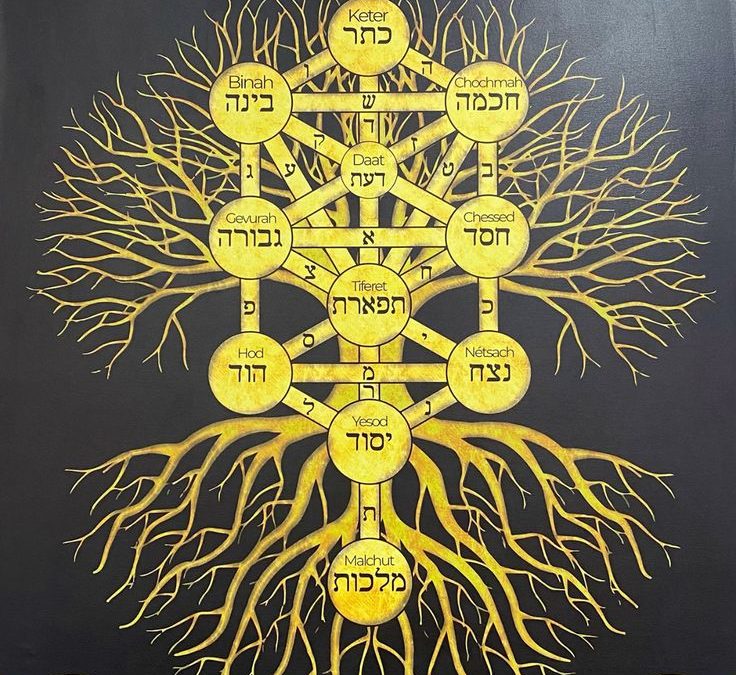
In Kabbalah, this integration sits entirely within the Tree of Life. As a result, the Tarot’s components connect divine energies, linking one sphere to the next.
Below, we look at how each of the five arts shows up within the Kabbalistic structure of the Tarot.
Mysticism: The Tree of Life in the Cards
At its core, Kabbalistic mysticism traces the soul’s journey back to its Divine Source. This journey follows the Tree of Life, and the Tarot mirrors it card for card.
Ten divine emanations, or spheres, sit on the Tree, and these correspond directly to the Minor Arcana. These are the Tarot’s numbered cards, one through ten, across all four suits. For example, all four Aces represent Kether, the Crown — the purest form of divine energy.
Similarly, the 22 Paths that connect the spheres correspond directly to the 22 Major Arcana. Meanwhile, the Four Worlds of Kabbalah — Atziluth, Briah, Yetzirah and Assiah — match the four Tarot suits: Wands, Cups, Swords and Pentacles. In this way, the whole deck becomes a working diagram of the Tree itself.
Magic: The Hermetic Elements at Play
In the Western Mystery Tradition, magic directs will to change reality. Because of this, the Tarot works as a magical toolkit built entirely from Kabbalistic correspondences.
The Court Cards illustrate this well. Pages, Knights, Queens and Kings each carry a different elemental configuration of magical personality types and forces.
The Magician, Path 12, offers a clear example. This card connects Kether, or Divine Will, to Binah, or Understanding. He holds all four elements on his table at once, and in doing so, he demonstrates the Kabbalistic magical maxim: “As above, so below,” channelling divine energy down into the physical world.
Alchemy: Spiritual Transformation Through the Cards
Kabbalistic alchemy does not concern itself with turning lead into gold. Instead, it focuses on purifying the soul, a process often called the Great Work.
The Major Arcana traces this transformation from start to finish. Its progression from The Fool to The World represents the alchemical stages of dissolution, purification and coagulation.
Certain cards depict this process explicitly. Temperance, Path 25, shows liquid poured between two cups in search of perfect equilibrium — the alchemical Art itself. The Tower, on the other hand, represents the breakdown of the false ego, and the Sun represents the spiritual gold that emerges once that breakdown is complete.
Astrology: Cosmic Timing Within the Deck
The Sefer Yetzirah, a foundational Kabbalistic text, assigns astrological forces to the 22 letters of the Hebrew alphabet. Because each Major Arcana card carries one of these letters, every card holds an exact astrological assignment.
For instance, the Three Mother Letters correspond to the primary elements: Air, Water and Fire. The Fool, for one, links to Air. Likewise, the Seven Double Letters correspond to the seven traditional planets — so The Empress represents Venus, while The Tower represents Mars.
Finally, the Twelve Simple Letters correspond to the twelve signs of the zodiac. The Emperor aligns with Aries, for example, while Death aligns with Scorpio. Through these layered correspondences, the Tarot doubles as a working astrological chart, not just a divination tool.
Numerology: The Gematria Behind the Cards
Kabbalah leans heavily on the mystical meaning of numbers to decode the universe, and the Tarot builds its entire narrative around this numerical progression.
Within the Minor Arcana, numbers one through ten trace the evolution of energy. Aces hold raw potential, for example, while Fives bring instability and conflict, matching Gevurah, the sphere of severity. Tens, in turn, mark absolute manifestation and finality, matching Malkuth.
The Major Arcana follows a similar logic. Its sequential numbering, from 0 to 21, tells a mathematical story of spiritual evolution. Consider The Lovers, numbered six: this card represents harmony and choice, a theme that relates directly to the sixth Sephirah, Tiphereth, or Beauty and Harmony.
At a Glance: Tarot and Its Kabbalistic Anchors
| Tarot Component | Kabbalistic Anchor | Integrated Art |
|---|---|---|
| 4 Suits | The Four Worlds | Mysticism and Magic |
| 10 Pip Cards | The 10 Sephirot | Numerology and Mysticism |
| 22 Major Arcana | The 22 Hebrew Letters and Paths | Astrology and Alchemy |